

A label doesn’t define an artist’s ambition. Independent artist music is made by a musician or group without a record-label contract. That distinction can shape who guides the career, how the music reaches listeners, and what kind of team forms around it.
Going independent doesn’t mean doing everything alone. It means building a path around your priorities, whether you stay outside a label or consider a partnership as your career grows. The key is making choices that fit your sound and long-term goals.
This article explains what makes an artist independent, how careers can take shape inside or outside label deals, and how community and a consistent brand help connect music with listeners. You’ll also learn how collaboration, fan relationships, and a clear creative identity can support the work beyond the recording session. The route is yours to shape, with strong music, purposeful decisions, and people who understand what you’re building as its foundation.
Key Takeaways
- Being independent describes your relationship with a record-label contract, not the size of your ambitions or audience.
- Build a career community through collaboration, fan communication, and relationships that support your music beyond release day.
- Make your artist identity recognizable across your music, profiles, and artwork, then keep your audience engaged with a consistent presence.
- Understand how music delivery and song copyrights relate to your income before choosing how to release your work.
Independent artist community and career development
An independent artist music career combines creative control with practical decisions about releases, promotion, and audience relationships. Build a community around the work, not just release day.
Choosing Music Distribution Platforms
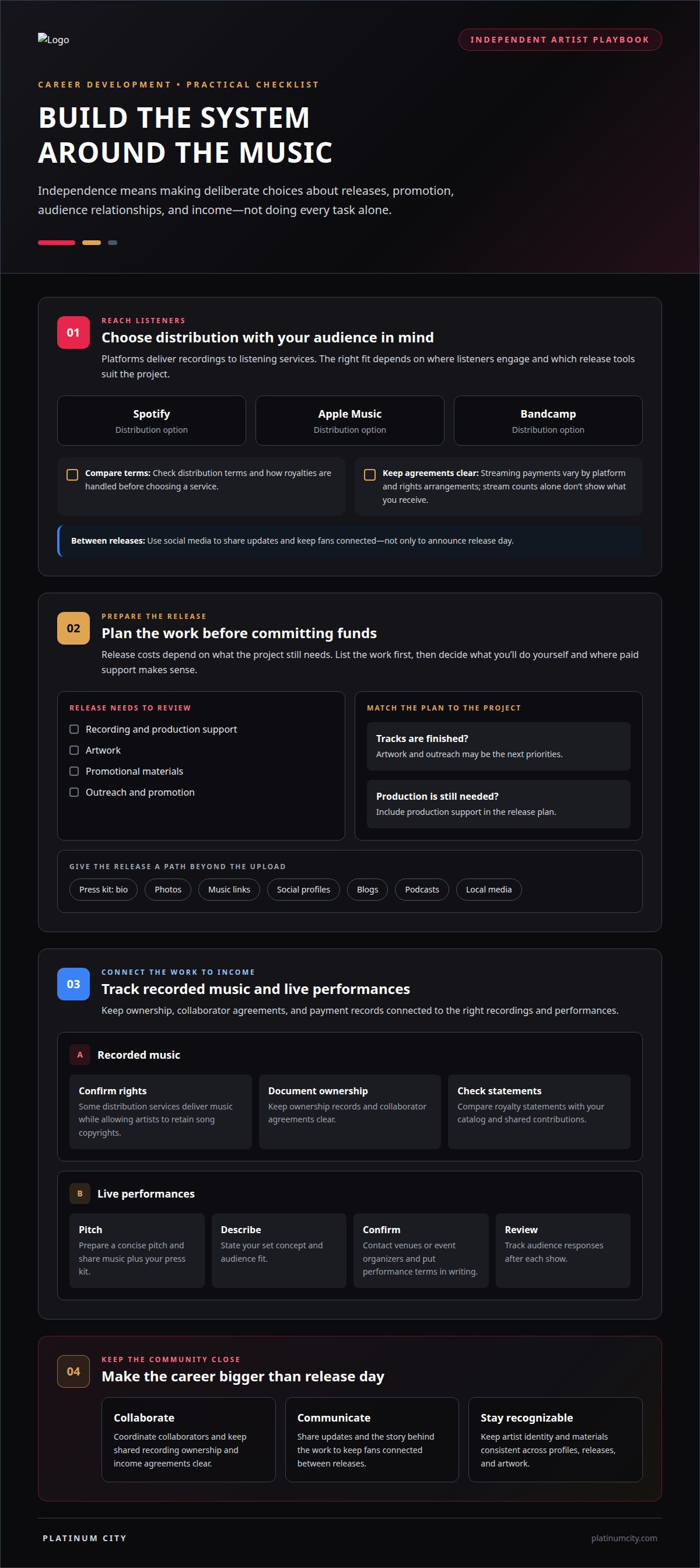
Music distribution platforms deliver recordings to listening services and help independent artists reach audiences. Spotify, Apple Music, and Bandcamp are options to consider. The right fit depends on where listeners engage and which release tools suit the project. An independent artist music strategy can also use social media to share updates and keep fans connected between releases.
There’s no single percentage that streaming services pay per stream. Payments vary by platform and rights arrangements, so stream counts alone don’t show what an artist receives. Compare distribution terms and royalty handling before choosing a service. Keep ownership and income agreements clear, especially when collaborators share a recording.
Planning Independent Release Costs
Release costs cover the work involved in preparing and sharing a project, such as recording, artwork, and promotional materials. List those needs before committing funds. An artist with finished tracks might prioritize artwork and outreach, while another may still need production support.
Decide which tasks you’ll handle yourself and where paid support makes sense. A press kit can include a bio, photos, and links to music and social profiles. Reaching music blogs, podcasts, or local media also takes planning. Give each release a clear promotional path beyond uploading tracks.
Building Music Income
Independent artists can earn through recorded music and live performances. Some distribution services deliver music to stores while allowing artists to retain song copyrights. Keep records of ownership and collaborator agreements, then compare royalty statements with your catalog. This helps connect payments to the right recordings and clarify shared contributions.
For live income, prepare a concise pitch, share your music and press kit, then contact venues or event organizers. State your set concept and audience fit. Confirm performance terms in writing and track audience responses after each show. A sustainable independent artist music career depends on understanding how each release and performance contributes to the larger plan.
Artists who remained independent or left labels
An unsigned artist is a musician or group without a record-label contract. Independence can mean more creative control and direct career decisions, while a label partnership may bring support alongside contractual commitments.
Advantages of Staying Independent
Staying independent means building a music career outside a record-label contract. That can give artists more say over their direction, release choices, and business decisions. It matters when an artist wants a career shaped around personal priorities rather than a label’s plans.
Chance the Rapper is identified as an artist who has never signed to a major record label. Artists can also create record labels and release music under their own imprints. These paths offer room to shape a distinct identity, but independence puts more decisions on the artist. Planning, promotion, and coordinating collaborators become part of the job.
Consider the trade-offs before each release. If you value direct control, map out who will handle the work around the music. If business tasks are squeezing your creative time, identify which responsibilities need outside support. The right structure helps you keep moving without losing sight of your goals.
Tradeoffs of Signing to a Label
A label deal is an agreement that brings an artist into a record company’s structure. The contract sets the working relationship, including how decisions and responsibilities are shared. A label can contribute a team and coordinated release support, while the artist takes on the obligations defined by the agreement.
Tinashe found independent success after leaving a label, showing that an artist’s route can change over time. Before signing, compare the creative and business terms with your priorities. Who makes release decisions? What responsibilities does the label take on? What does the artist commit to? Clear answers help reveal whether the arrangement fits your direction.
Artists weighing career structure can explore artist management and development as one way to support planning and growth. The choice isn’t simply independence versus a deal. It’s about understanding the work, decision-making, and commitments attached to each path.
Developing an authentic and consistent artist brand
An artist brand is the recognizable identity connecting music, visuals, and public communication. Build it from ideas and experiences already present in your work. For example, a songwriter exploring city life might use specific imagery, colors, and language across releases. The goal isn’t to look identical everywhere, but to help listeners recognize the same creative point of view.
Start with three practical questions: What themes return in your songs? What should listeners feel? Which visual choices fit that sound? Write down the answers, then use them to guide social media profiles, your website, and album artwork. If a moody sound defines the record, bright promotional graphics may feel disconnected. Make every choice serve the music.
Consistency also means giving your audience a steady picture of your work. Keep your artist name, biography, photos, and links current across platforms. A press kit can bring those pieces together with music and social media links. This makes it easier for listeners, podcast hosts, and music blogs to understand the project and find the right material.
Plan content around the story behind a release, not just its arrival. Share a lyric, explain an inspiration, or show how a track changed during recording. Connect each post to the music without changing your voice to chase every trend. A clear, repeatable style helps fans follow the creative thread between songs, performances, and updates.
Consistency needs room for growth. Before each release, review the artwork, profile text, photos, and announcement together. Ask whether they represent the music accurately and give listeners a coherent impression. If a new project marks a real shift, let the visuals evolve with it. Keep your artist identity recognizable while making the change intentional and easy to understand.
How do independent artists make money from music?
Independent artists can earn from recorded music, live performances, and direct relationships with listeners. Each route works differently. A release can keep generating plays, while a show connects income to a specific performance. A clear plan helps artists see which activities support their goals and where revenue comes from.
Recorded music income can come through sales and streaming, with distribution services delivering tracks to stores. Keep release records organized: note each track, its collaborators, and the agreed ownership or income split. When royalty statements arrive, compare the listed works with your own records. This helps identify missing tracks or unclear splits before they complicate future releases.
Live performances add another income route. A show’s terms shape what the artist earns, so discuss the fee, set length, and promotion responsibilities before confirming. For example, an artist booking a venue can share a press kit, agree on performance details in writing, and track ticket or attendance information afterward. Those details help inform future bookings.
- Recorded releases: Track sales and streaming activity by title, then match statements to your catalog.
- Live shows: Document each booking’s fee, performance terms, and promotional duties.
- Direct fan support: Use an email list to tell loyal listeners about releases, concerts, and exclusive content.
- Collaborations: Record each contributor’s role and agreed share before releasing a joint track.
Revenue planning also means weighing time against return. A polished release needs promotion, while a live date requires preparation and audience outreach. Compare which efforts bring listeners closer to the music, then focus your energy there. Consistent records make it easier to see what’s working across songs, shows, and fan communication.
Build a simple income ledger around each release or performance. Include the title or event, date, collaborators, income source, and related costs. Review the entries after each release cycle. A clear picture of how music activity connects to earnings helps artists make sharper decisions about the next project, performance, or audience offer.
Platinum City: Exclusive Platinum City tracks
Platinum City connects listeners with exclusive tracks and music albums, offering a direct way to discover independent artist music beyond your own catalog. Music and comedy albums bring both formats together, while Platinum City’s music and comedy event production creates a live setting for audiences to experience performers.
These offerings suit different moments: listen to exclusive tracks, explore albums, or experience a live event in person. Each provides a distinct way to connect with music and entertainment, rather than treating every release or performance as the same.
For an independent artist building a career, understanding how releases and live experiences complement each other can help clarify the next move. Contact Platinum City to explore its music and event offerings.
Make Your Next Move Count
Your next move doesn’t need to define your whole career. Choose one clear action that supports the artist you’re becoming, whether that means shaping your next release or strengthening your connection with listeners. An independent artist music career grows through deliberate choices, and each project can bring your direction into sharper focus.
Platinum City offers music and comedy albums, plus streetwear, gifts, and novelty items for audiences who want to connect with its creative world beyond the music. If you’re ready to explore how its music offerings fit your interests, contact Platinum City to discuss your music.
Keep moving with purpose. Your sound, your decisions, your next chapter.
Frequently Asked Questions
What Is An Independent Artist?
An independent artist builds a music career without a record-label contract. The artist may release recordings directly or work with a self-created label imprint. Using a distributor or hiring help for specific tasks doesn’t, by itself, define the artist’s label status. The key distinction is the relationship with a record-label contract, not the size of the audience.
What does it mean to be an independent music artist?
It means directing a music career outside a record-label contract, with the artist responsible for key choices and arrangements. For example, an artist might choose collaborators, set a release direction, and decide how to present a project. Independence doesn’t require handling every task alone. Artists can work with other professionals while keeping their career outside a label agreement.
How can independent artists promote their music and build an audience?
Give each release a clear story and a repeatable way for listeners to follow it. For example, introduce a song’s inspiration, share a short excerpt, and invite fans to hear the full track. Then use audience responses to guide future posts or live sets. A focused campaign makes each update feel connected, rather than like a stream of unrelated announcements.
What resources and music industry organizations support independent artists in the United States?
Useful support can come from musician associations, songwriter communities, local arts organizations, and peer networks. Look for resources that match your immediate need, such as career education, creative feedback, or opportunities to meet collaborators. Before joining or relying on a group, review its purpose and activities. A relevant community can help you build skills and relationships around your specific goals.
How much does it cost to release music independently?
Release costs depend on what the project needs, such as recording, artwork, and promotional materials. List the tasks and expenses before committing funds.
